Wednesday, December 9, 2015

Unit 5 Reflection

This unit was all about how DNA and RNA helps our body make proteins that help it function. This process is called protein synthesis. In this process, DNA first replicates itself into a one stranded copy called mRNA, which replaces base T with base U. This process of making RNA is called transcription. Next, the mRNA leaves the nucleus and goes to the ribosomes. Here, the ribosomes take groups of three base pairs called codons, and make amino acids. All the amino acids that the ribosomes make are chained together to form the protein. These proteins help our body work. Here is a visual example of protein synthesis.
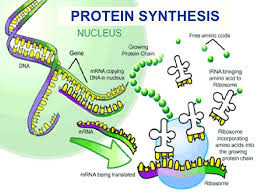
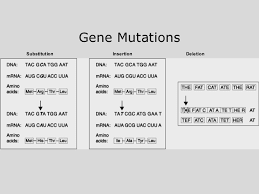
 I also learned how mutations in this process affect our bodies. The most dangerous mutations are probably the frameshift mutations, either insertion or deletion. These either change the protein completely, or don't make the protein at all. Any mutation, either frameshift or substitution at the beginning of a sequence really causes damage to the end protein. Here is a visual representation of how mutations affect the protein.
The protein synthesis lab really helped me understand this topic, and I think at first, I was at a 3 on a scale of 1-5, and now I am at a 5. If there was one topic from this unit that I had to work on, I think it would be gene expression and regulation. Was that vodcast just an extension of the protein synthesis vodcast? In the last unit, I took a survey and learned that I learn best with hands on activities. This unit, I did the lab conclusions very carefully and thoroughly, and learned a lot from the DNA extraction lab and protein synthesis lab. In all, I am a better student than I was at the beginning at the unit, both content based and skil based. 

Tuesday, December 8, 2015

Protein Synthesis Lab

Protein synthesis has three different steps. The first one is transcription where DNA is copied into a mRNA, which is where uracil is substituted for thymine and it is a single strand. The mRNA then leaves nucleus and travels to the cytoplasm. The next step is called translation, where the actual protein is made. In this step, the mRNA attaches to the ribosome, and the ribosome matches each codon to an amino acid. After translation is finished, the amino acids fold up to make a protein!


The mutations that seemed to be harmless or very in affective seemed to be the small substitution mutations. When taking out a letter and replacing it with the other, the protein did not change at all. However when DNA had a letter added the effects were obvious. Even when the strand was deleted the protein turn out to be a disaster. However, I wanted to see what would happen if we affected the beginning of the sequence, so I used substitution at the begging, and there was no start codon, so there was no protein. I think that any mutation, either frameshift mutations (insertion or deletion) or just substitution to the start or end of a sequence would completely change the end result. In the middle, these mutations aren't quite as harmful, especially with substitution. This is why the location of the mutation matters.


To make a mutation with maximum effect I substituted one of the base pairs in the first codon. I chose this because it would change the start codon, which would prevent the ribosome from making a protein at all. Substitution has to occur in the start of the sequence for it to have a major effect, otherwise it's effect will be very minor, like what we saw with our first substitution, where the protein didn't change at all.  


Proteins normally help us carry oxygen in our blood and digest food, so mutations can damage these processes or even stop them completely! And it's not only these things that mutations could affect, it could affect any other phenotype which humans should have. Uner Tan syndrome is a genetic disorder caused by a mutation in the DNA, and it causes people to walk on all fours. These are one in many ways mutations can affect our lives.

Sunday, December 6, 2015

DNA Extraction Lab

The question of the lab was, "How can DNA be separated from cheek cells in order to study it?". We claimed that DNA can be extracted through three different steps, homogenization, lysis, and precipitation, which is where the DNA first becomes visible. Homogenization was when we swished Gatorade in our mouth and spit out cheeck cells, and let the Gatorade break them down. Lysis was when we added salt, detergent, and then the pineapple juice as the protease  to destroy the cell membrane or wall. Precipitation was when we added alcohol and the DNA became visible at the top because the Gatorade is nonpolar and the alcohol is polar. After our procedure was completed, we were able to see small strands of white lines in our alcohol solution which was DNA and after completing the procedure twice we got the same result. This shows that DNA can be extracted from cells and can be seen if following the right procedures.

While our hypothesis was supported by our data, there could have been a few errors. First, the alcohol could have mixed with the Gatorade if you poured it too hard. That would cause the DNA to remain unseen because it would not rise to the top. Second, there could have been too much  Gatorade and/or too little cheek cells . That could have caused the DNA to not show up or not float up to the alcohol during precipitation. Due to these errors, in future experiments, I would recommend to have a measured amount of Gatorade and wipe the inside of the cheek with cotton around ten times. To solve the Gatorade and alcohol mixing, you should tilt the Gatorade test tube and let the alcohol trickle in. 


  This lab was done to demonstrate that DNA could be separated from cheek cells in order to study and observe it. From this lab I learned and what an enzyme help create a reaction an eventually some DNA, this helps me understand how a enzyme works on a larger scale. Based on my experience from this lab, I could apply this knowledge to another situation if I were to maybe look at DNA on more of a molecular level, and needed to re-create someones DNA in that kind of form.

Thursday, November 19, 2015

Unit 4 Reflection

This unit was all about sex and why it's so great and interesting! I learned a lot about myself and what helps me learn. In the VARK questionnaire, my visual score was a 7, my aural score was a 9, my reading and writing score was a 2, and my kinesthetic score was a 10. I learned I learn better with hands on activities, and in the case of biology, I learn the best with labs. The Passing on My Genes Mini-Lab and the Coin Sex Lab really helped me understand how new combinations of alleles are made and how they are passed on. My second best learning style is hearing. these are the two things I will use to study for the test. For the kinesthetic part, I will try to find online labs relating to what we learned this unit, specifically on mitosis and miosis. For the hearing part, I will listen to Mr.Orre's vodcasts again and try to take in the information. The themes about this unit was all about the cell cycle and Mendel's laws in genetics. We also learned about genetics and the difference between mitosis and meiosis. My strengths were using Punnett squares to predict what offspring would look like and the autosomal and x linked inheritance. Some things I need to work on are mitosis and meiosis, and how they are different. I learned a lot from the infographic because the infographic made me understand the different topics that were covered in the unit. Pictures and the information brought everything together for me. I am indeed a much better student than I was before this unit started!

Wednesday, November 18, 2015

Coin Sex Lab

In this lab, we learned how to use punnet squares to predict what our offspring will look like and what traits they will have. The coins served as genes and the two sides of the coins served as alleles. The flipping of the coin modeled meiosis and putting them together modeled recombination, or in other words, sex. The coins also showed how probability of something happening can be different from what actually happens. We did multiple autosomal crosses, where the sex chromosomes are not involved, and one x-linked cross, which is when the sex chromosome are involved. We used two sets of a coin each to represent a monohybrid cross, and two sets of two coins each to represent a dihybrid cross. In a few of our tests we labeled both sides of the coin the same letter to represent a homozygous trait, but in others we labeled the two sides differently to represent a heterozygous trait. When we preformed the di-hybrid cross, we got results that were slightly different than what was expected. The punnet square gave us a phenotype ratio of:
9 Brown Hair, and Brown eyes : 3 Blond Hair, and Brown eyes : 3 Brown Hair, and blue eyes :
1 Blond Hair, and Blue eyes

Our experiment had slightly different results, and gave us the phenotypic ratio of:

8 Brown Hair, and Brown eyes : 4 Blond Hair, and Brown eyes : 2 Brown Hair, and blue eyes :
2 Blond Hair, and Blue eyes

The slight difference between the probability, and what actually happened is due to the fact that probability is not always what is going to happen. It is possible to cross two heterozygotes, and get two recessive alleles in all ten offspring just like you can flip a coin ten times and get heads every time. This lab demonstrated the limits of probability. Probability can give you odds on what can happen, but until the event occurs there is no guarantee it will happen. Relating back to the coin, the probability of getting heads two times in a row is a 25% chance, but until you flip the coin twice you can't know if you will get two heads.

This lab relates to me because if/when I have children, then I can use probability to predict what they might be like, but I have no way to know for sure what traits they will have, until they are born.what traits they might have gotten until they are actually born.

Monday, November 16, 2015

Genetics Infographic

Because this infographic is too small, click for a larger version here

Saturday, October 17, 2015

Unit 3 Reflection

This unit was about cells, their structure, and their function. It was also about the concepts of photosynthesis and cellular respiration. My strengths are the function of cells and all their parts. I know the organelles by heart (ribosomes, nucleus, ER, Golgi body, mitochondria, cell wall, cell membrane, cytoplasm, lysosome, chloroplast, etc.) I know the functions of all these organelles and how they complement each other. At first I didn't understand diffusion at all, but the egg diffusion lab really helped me understand it better. I got a wider understanding of hypertonic and hypotonic solutions. I really learned how diffusion affects a cell's size. I understand photosynthesis a little better after Mr. Orre explained it in detail with the diagrams in class. However, my weakness in this unit is cellular respiration. I get the products and reactants, but I don't understand the details of it yet. Maybe to study, I will watch Mr. Orre's vodcast again and draw diagrams without my notes and label them. The lab with the microscope was really fascinating to me because I got to see some organelles up close with different cells. I am still curious about what ribosomes look like, although they are very hard to see with our microscopes. I want to learn more about the process of photosynthesis because it really fascinates me. I look forward to the next unit.